Three sneezes before the first stop sign. If that's how your spring drive starts, the fan pulling pollen through a tired cabin air filter is a likely suspect.
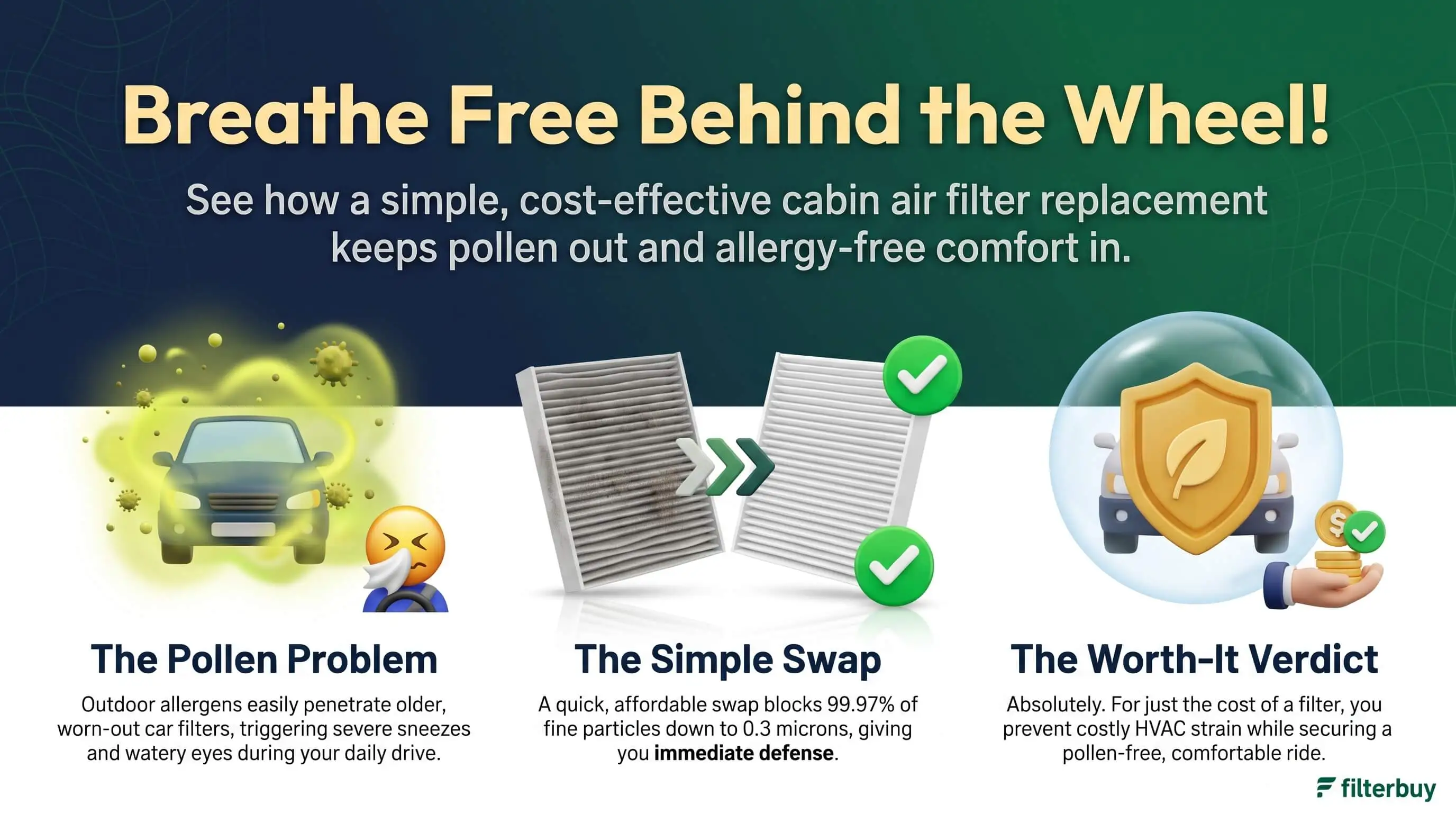
For most drivers with pollen allergies, a fresh filter is worth it, and the cabin air filter replacement cost is easy to live with. Expect about $15 to $50 if you swap it yourself, or $91 to $114 at a shop, which is less than a single urgent care copay on many health plans .
I went looking for straight answers to two questions. Does a new filter actually make the drive easier on your sinuses, and what's a fair price to pay? Both answers turned out better than I expected, and both start at an air intake most drivers have never looked at.
TL;DR Quick Answers
A cabin air filter replacement costs $91 to $114 at most shops, and labor makes up about half that bill. Doing it yourself costs only the filter, roughly $15 to $50. If your filter sits behind the glove box, the swap takes about ten minutes, so DIY is the easiest way to save.
Shop average. $91 to $114, with labor estimated at $45 to $66
DIY cost. $15 to $50 for the filter alone
Dealerships. Usually higher because of steeper labor rates and minimum charges
Glove-box check. A filter behind the glove box is a no-tools, ten-minute swap. One under the dash or cowl is worth the shop fee.
Allergy math. A $25 filter works out to about 10 cents per pollen-season day.
Top Takeaways
It's worth it for most allergy sufferers. A fresh filter lowers the pollen reaching you in the car for about 10 cents per pollen-season day.
Labor is about half of a shop bill. Shops average $91 to $114, while doing it yourself costs only the $15 to $50 filter .
The calendar beats the odometer. Swap it two to four weeks before tree pollen season starts.
HEPA-grade media pays off when pollen is your trigger, because it catches fine fragments a standard filter lets through.
Good habits stretch the benefit. Recirculation and closed windows let the filter do its job.
How Pollen Gets Into Your Car
Every time your fan pulls in outside air, it draws from an intake near the base of the windshield, and pollen rides right along with it. The cabin air filter is the only barrier between that air and your face. That's why drivers in the UK simply call it a pollen filter.
Your car is a small, sealed room. Whatever slips past the filter has nowhere to go except your nose and eyes, and open windows, a cracked sunroof, or pollen on your jacket only add to the load. Once the filter clogs, airflow drops, the blower motor strains, and the trapped debris can start to smell musty. You can't see any of this. You feel it, usually somewhere around mile two.
What a Fresh Cabin Air Filter Does for Allergy Symptoms
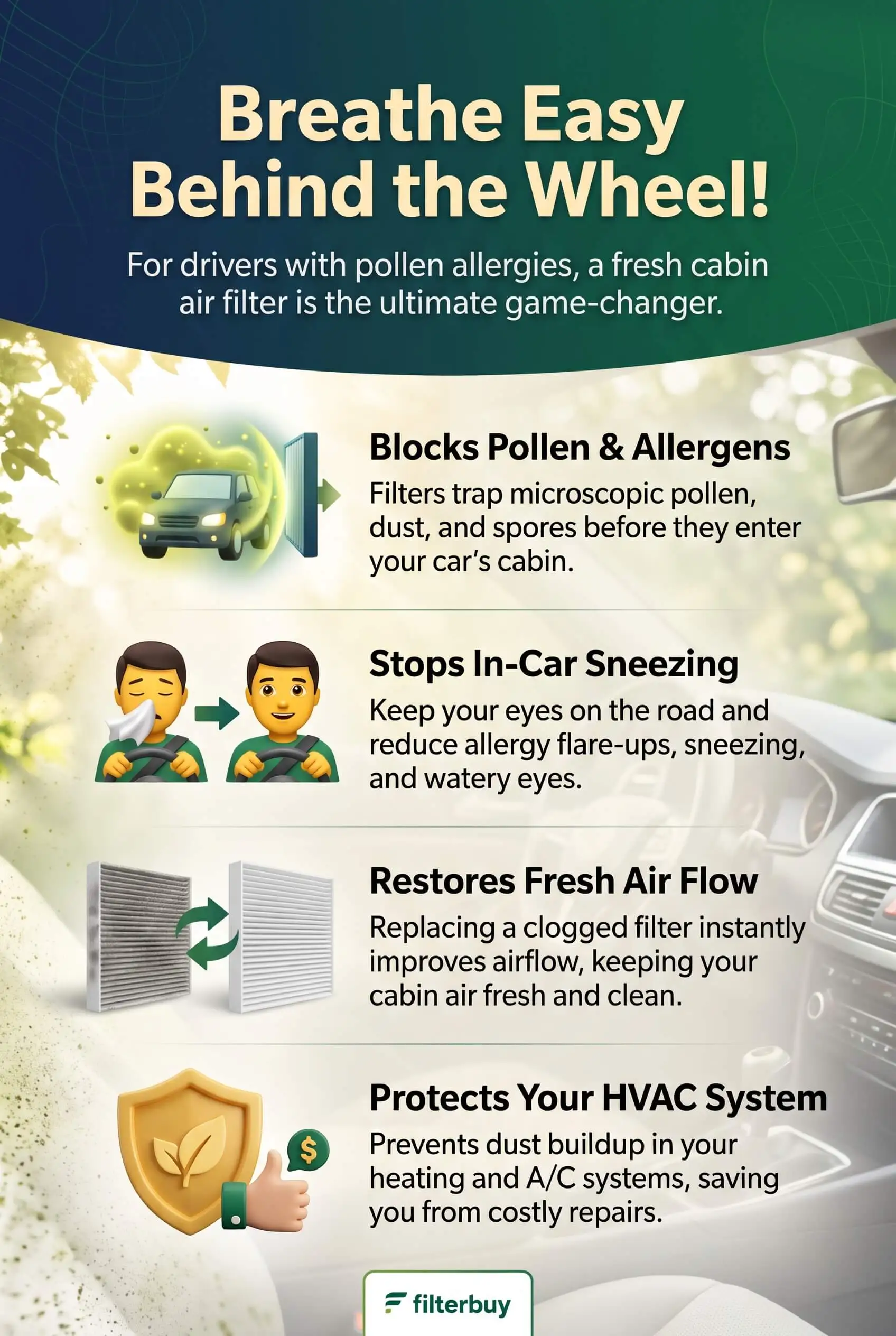
A fresh cabin air filter cuts down how much pollen reaches you inside the car. It won't treat your allergies, and it can't make up for a rolled-down window. What it does is lower your exposure during the 30 to 90 minutes a day many of us spend behind the wheel , so your body has less to react to.
Age matters, too. As the media fills with dust, airflow falls and filtering gets worse, which makes when you replace it nearly as important as what you buy.
Particulate, Activated Carbon, or HEPA: Which Helps Most With Pollen?
Basic particulate filters catch dust and most whole pollen grains for the least money. Activated carbon filters add a layer that soaks up odors and some exhaust gases, a real help in stop-and-go traffic. HEPA-grade filters trap much smaller particles, including the fine fragments pollen breaks into after a rain. If pollen is your main trigger, HEPA-grade is where I'd put the extra $10 to $25 .
What Does Cabin Air Filter Replacement Cost?
At a shop, the national average cabin air filter replacement cost runs $91 to $114. RepairPal's cost estimator puts labor at $45 to $66 and parts at about $47 to $48, so labor makes up roughly half the bill. Doing it yourself costs only the filter, roughly $15 to $50 .
Where you go moves the price more than what you drive. Quick-lube chains often come in under the average and independent shops land close to it, while dealerships tend to run higher because of steeper labor rates and minimum charges . For a fuller breakdown by vehicle and shop type, this guide to the typical cabin air filter replacement cost lays out the parts-versus-labor split.
Pro tip: open your glove box before you book anything. If the filter sits behind it, the swap takes about ten minutes with no tools, and $45 or more in labor buys you very little. A filter tucked under the dash or below the cowl is a different story. That's when the shop fee earns its keep.
The Allergy-Season Math: Is It Worth the Money?
For most allergy sufferers, the numbers land clearly in favor of a new filter. Tree, grass, and weed pollen together can stretch from late winter into fall, roughly 240 days in many parts of the country . Spread a $25 filter across that window and you're paying about 10 cents a day. A $100 shop visit works out to about 42 cents.
Hold that up against a box of allergy tablets or one foggy, sneezy workday, and the filter turns out to be the cheapest piece of your allergy plan. Just as duct cleaning can help address dust buildup in your home's HVAC system, replacing your cabin air filter helps reduce the pollen entering your car. It keeps getting more valuable, too, because pollen seasons now start earlier and run longer than they did a few decades ago.
When to Replace It If You Have Pollen Allergies
Most automakers suggest a new cabin air filter every 12,000 to 15,000 miles or once a year . If pollen is your trigger, I'd go by the calendar instead and swap it two to four weeks before your local tree pollen season. The American College of Allergy, Asthma and Immunology notes that season can begin by mid-February in southern climates and mid to late March in colder ones. Replacing your home air filters around the same time can also help reduce pollen and other airborne allergens indoors.
Swap it sooner if you notice any of these:
A musty or dusty smell the moment the fan starts
Weak airflow, even on high
Sneezing or itchy eyes that start on the drive and fade once you're out of the car
Gray, matted media or bits of leaves when you pull the filter
Habits That Help a New Filter Work Harder
A new filter does its best work when you give it a little help.
Recirculate on high-pollen days. The system cleans the air already inside instead of pulling in a fresh dose of pollen.
Keep the windows and sunroof closed during morning hours, when counts tend to peak.
Vacuum seats and floor mats every week or two through spring.
Park away from flowering trees whenever you have the choice.
Your Car Is a Small Room
Everything above applies at home, just on a bigger scale. If a fresh filter makes your hour in the car easier, the filter in your HVAC system is covering the other 23. For that side of things, here's a helpful look at maintaining indoor air quality with the right filter.
"Every spring I pull cabin filters that are gray on the intake side and still white on the back. That tells me the pleats are packed and air has started sneaking around the frame seal, and for a pollen-sensitive driver, a fresh filter seated flat in its housing matters as much as the rating printed on the box."
7 Essential Resources
Get ahead of pollen season. The American College of Allergy, Asthma and Immunology shares seven practical steps, from closing windows to timing your medication, in Stay Ahead of Allergies With These 7 Expert Tips.
See how common pollen allergies are. The American Academy of Allergy, Asthma and Immunology keeps its roundup of U.S. figures current on the Allergy Statistics page.
Read a repair estimate with confidence. The FTC's Auto Repair Basics spells out what a written estimate should list and explains why you can ask for replaced parts back.
Learn what pollen does in your body. The National Institute of Environmental Health Sciences covers pollen and other common triggers on its Allergens page.
Look at the bigger indoor air picture. The EPA's Introduction to Indoor Air Quality shows how outdoor pollutants find their way inside and why ventilation matters.
Know the symptoms and treatment options. MedlinePlus, run by the National Library of Medicine, sums up hay fever basics and links to vetted resources on its Hay Fever page.
Pair your filter with the right medication. The FDA's Know Which Medication Is Right for Your Seasonal Allergies walks through antihistamines and nasal sprays and recommends keeping car windows closed when counts run high.
3 Supporting Statistics
25.2%. That's the share of U.S. adults with a diagnosed seasonal allergy in 2024, or about one in four drivers on the road. (CDC National Center for Health Statistics, Data Brief 545)
81 million. People in the U.S. were diagnosed with seasonal allergic rhinitis (hay fever) in 2021, about 67 million of them adults. (Asthma and Allergy Foundation of America)
166 of 203. U.S. locations where the growing season, and the pollen season along with it, got longer over the past half-century. (Climate Central)
With 25.2% of U.S. adults affected by seasonal allergies and pollen seasons growing longer across much of the country, regularly replacing cabin air filters and using MERV 8 pleated furnace air filters at home can help reduce exposure to airborne pollen and other allergens.
Final Thoughts and Opinion
Here's where I land. If pollen gets to you, a fresh cabin air filter is one of the easiest wins you've got. It costs less than a month of allergy pills, takes about ten minutes on most cars, and goes to work every time the fan runs.
It won't replace medication or a good allergist. It can't help with the windows down, either. But time the swap before your local pollen season, pair it with recirculation, and your car goes from pollen trap to one of the cleaner rooms in your day. Just as updating your ductwork can help improve airflow and reduce dust buildup in your home's HVAC system, replacing your cabin air filter helps keep airborne allergens out of your vehicle.
Frequently Asked Questions
Does a cabin air filter help with pollen allergies?
Yes. A clean cabin air filter traps pollen at the outside-air intake before it reaches your vents, so less of it reaches you while you drive. You'll get the most from it with the windows up and recirculation on during high counts. Keep expectations honest, though. It cuts your exposure and doesn't treat the allergy itself.
How much does cabin air filter replacement cost at a dealership?
Usually more than the $91 to $114 national shop average, because dealers tend to charge higher hourly labor rates and minimums . Ask for parts and labor listed separately on the written estimate, and ask whether they'll install a filter you bring in yourself.
Is a HEPA cabin air filter worth it for allergies?
For drivers whose main trigger is pollen, usually yes. HEPA-grade media catches much smaller particles than a standard filter, pollen fragments included, for roughly $10 to $25 more. Just confirm it fits your exact year, make, and model before you order.
How often should allergy sufferers change their cabin air filter?
At least once a year, timed two to four weeks before your local tree pollen season. Swap it sooner if you notice a musty smell, weak airflow, or symptoms that start on the drive and ease once you step out.
Should I use recirculation mode during pollen season?
Yes, on high-pollen days. Recirculation cuts the amount of outside air your system pulls in, which leaves less pollen for the filter to handle. On long drives, switch back to fresh air now and then if the windows fog or the cabin starts to feel stuffy.
Breathe Easier on Every Drive
Pop open your glove box, find out where your cabin air filter sits, and put a swap on the calendar a few weeks before your local pollen season begins. Choosing high quality filters can help capture more pollen and other airborne particles before they enter your cabin. Ten minutes of effort makes every drive easier on your sinuses, and you'll feel the difference each time you turn the key.


